
Digital transformation in logistics: the real challenge is not the technology
The integration of systems, change management and data quality are key factors for the future of the supply chain.
Digital transformation in logistics has always been associated with automation. However, that view has proven to be too limited. Companies no longer just implement new tools; what truly creates value is how that information is used so that operations make sense and better decisions can be made.
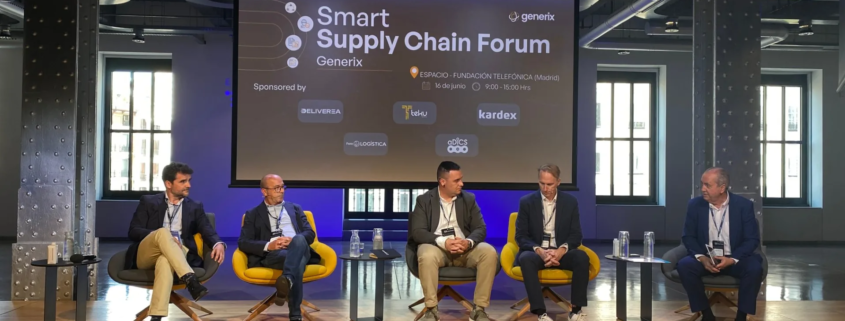
At the Smart Supply Chain, organized by Generix, experts analyzed how the supply chain is evolving and how Artificial Intelligence is part of this transformation. Raúl Sanz, our Iberia–Mexico Contract Logistics Manager, shared some key insights.
Data matters, but so does understanding it
Today, we have a large amount of data. The question is: do we know how to interpret it correctly? Do we know how to turn it into useful information?
In many organizations, there are still applications that operate independently. The warehouse works with one system, transport with another and the customs area with a different one. When this information remains isolated, it becomes much more difficult to have a global view of the operation.
That is precisely why, system integration has become one of the main objectives of logistics digitalization. Having a single source of information makes it easier to track goods, improves responsiveness and allows issues to be detected before they impact the customer.
As a 4PL operator, why limit ourselves only to the warehouse?
This was the key question addressed by Raúl Sanz:
“The WMS can integrate forwarding, customs and final transport information. When you connect all this data, you gain a complete view of the supply chain and a greater ability to make decisions”
Artificial intelligence needs to be built on a solid foundation
Artificial intelligence is increasingly present in logistics discussions. Topics such as demand forecasting, inventory optimization or automated route planning are often mentioned. However, none of these tools can provide reliable results if they work with incomplete or incorrect information.
Are the data used by the organization reliable?
When planning AI projects, the first question to ask is: are my organization’s data reliable?
Raúl Sanz emphasized this idea:
“Data in logistics must be accurate, unique and traceable. If we work with incorrect information and feed it into artificial intelligence systems, the conclusions will also be wrong. Before talking about quantity, we must talk about data quality”
This reflection highlights that artificial intelligence optimizes processes and supports decision-making, but it cannot manage information quality.
Digitalization also means putting people at the center
Whenever digital transformation is discussed, the focus is often on technical aspects such as software, automation or robots. However, people have often been left in last place, even though they are usually the ones who determine whether a project will succeed.
Undoubtedly, when a new tool or feature is introduced, it changes processes, routines and, consequently, the way of working. For this reason, it is essential that people are involved from the beginning in these processes, as this will reduce adoption time.
As a result, change management remains one of the major challenges of any digitalization project.
In the words of Raúl Sanz:
“One of the most common mistakes is to approach technology projects from a purely technical perspective, without involving those who will use them on a daily basis”
This reflection reinforces the need to listen, explain the change plan and support all stakeholders during implementation, which can be just as important as choosing the right technology.
A more connected supply chain starts with process integration.
Transport disruptions, regulatory changes or geopolitical uncertainty have highlighted the importance of having real-time information. The greater the visibility over the supply chain, the greater the ability of companies to anticipate and respond.
In this context, integrating processes is no longer just a technological improvement but becomes a strategic decision. Connecting warehouse, transport, forwarding and customs allows for building a complete view of the operation and responding more agilely to a constantly changing environment.
The conclusions shared during the Smart Supply Chain Forum point precisely in that direction. Before moving on to more advanced automation or artificial intelligence projects, many organizations still have room for improvement in aspects such as data quality, system integration and process review.
Digital transformation goes far beyond adopting technology
Logistics digitalization does not depend solely on the tools a company uses. It depends, above all, on how it connects information, the level of trust it can place in its data and the ability of people to adapt to new ways of working.


Leave a Reply
Want to join the discussion?Feel free to contribute!